

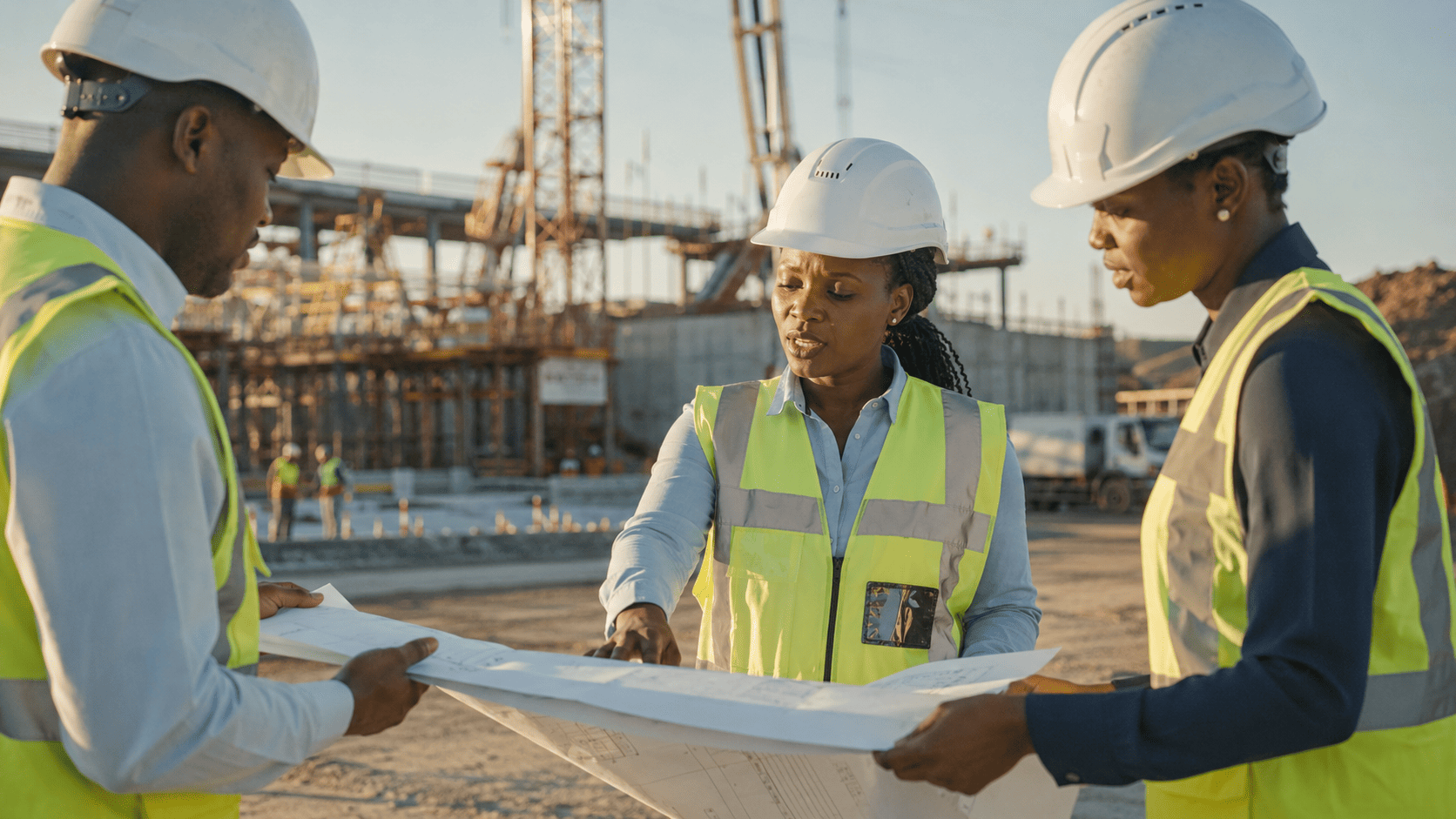
Empowered Women Do More than Just Build Structures
By Lufuno Ratsiku, founder and CEO of Gentec Consulting
Seventy years ago, on 9 August 1956, 20 000 women marched to the Union Buildings in Pretoria to protest laws that threatened their freedom and dignity. Their message was clear: women would not accept a system that sought to determine their place in society.
The significance of this march is still palpable today.
To mark the 70th anniversary of the Women’s March during Women’s Month, the theme “Strong Women Empower the Nation” offers an opportunity to reflect on what empowerment means in the modern South African economy – particularly in the built environment.
The built environment needs women
The built environment shapes the country in which we live. From infrastructure and construction to engineering, real estate development, project management and consulting, the sector is of central importance for economic growth and the creation of jobs and opportunities.
Nevertheless, women remain underrepresented in many areas of the industry, particularly in senior technical, commercial and management positions.
This needs to change.
As a male manager in the construction industry, I am convinced that men have a crucial role to play in accelerating this change. Supporting women cannot be limited to declarations made during Women’s Month. It must be reflected in the decisions we make throughout the year – whom we hire, whom we promote, whom we offer opportunities to, and whose voices we listen to in important decisions.
Empowerment must be practical.
It means opening up opportunities for women to gain experience and take on responsibility. It means paving the way for them into technical professions and leadership positions. It means supporting women-led businesses so they can access markets and actively participate in major projects.
This also means recognising that change needs action: women need the authority, the resources, and the confidence to influence outcomes.
The built environment needs their contribution.
Moving beyond compliance
South Africa faces enormous challenges and opportunities in the infrastructure sector. To meet these challenges, we need people with diverse experiences and perspectives. Women bring skills, expertise, and viewpoints that strengthen organisations, projects, and the communities they serve.
But we also need to move beyond seeing women’s participation as a compliance issue.
Women are not being given opportunities because the industry is doing them a favour. They belong in the industry because they possess the skills, abilities, and ambition to contribute to its success.
For companies like Gentec Consulting, this is also about building a stronger sector. Promoting talent, creating opportunities for young professionals, and supporting entrepreneurs strengthens the entire value chain.
The responsibility extends beyond large corporations. Small and medium-sized enterprises can play a vital role by creating jobs, fostering young talent, and providing women with opportunities to gain practical experience.
Mentorship and representation matter
Mentoring is particularly important.
A young woman pursuing a career in engineering, construction, project management, or another field within the built environment needs to see that leadership is possible. She needs access to people who can share their experiences, help her overcome challenges, and encourage her to seize opportunities that initially seem unattainable.
Representation matters because people are more likely to imagine themselves in positions they can see others occupying.
This is where the legacy of the women of 1956 becomes particularly powerful.
Those women did not just march for themselves. They acted with the awareness that their courage could create a different future for generations to come.
Our responsibility today is to do the same.
Turning empowerment into action
For men in leadership, that means recognising that empowerment is not something we grant to women. It is about dismantling the barriers that should never have existed in the first place, and creating an environment in which women can compete, lead and succeed.
For women who are already established in the construction industry, this means using their positions to promote and develop those who follow.
For organisations, this means going beyond mere commitments on paper and measuring whether women are actually rising to influential positions and ownership structures.
And for the entire industry, this means understanding that we cannot build an inclusive economy if we marginalise a significant portion of our talent.
The built environment encompasses more than buildings, roads, bridges, and infrastructure. It creates the foundations for the society we desire.
If we want a stronger, more inclusive and more competitive South Africa, women must be at the heart of its development.
Honouring the legacy through opportunity
The women who marched to the Union Buildings in 1956 showed what can happen when women stand together and demand change.
Seventy years later, we honour that legacy not only by remembering their courage, but also by ensuring that this courage continues to create opportunities.
Empowered women empower the nation. Our responsibility as leaders – men and women alike – is to ensure that the doors of opportunity are open, and that women have the support, resources and authority to walk through them and lead.